
Returning Home: Lessons from IPBES12 in Manchester and the Business & Biodiversity Assessment

Graham Makepeace-Warne
MWT CEO, Graham, reports on a week in Manchester attending the historic IPBES12 and the publication of the Business and Biodiversity Assessment.

Graham Makepeace-Warne
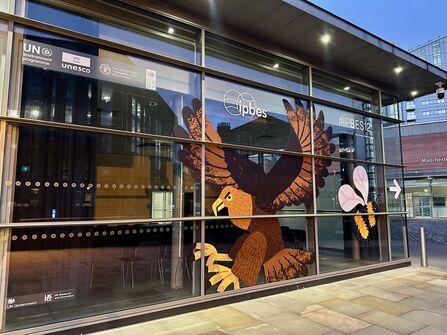
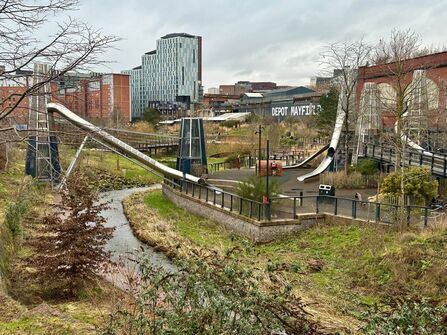
The conference took place in my hometown of Manchester. This meant I could stay with my parents, who still live in the family home nearby, walk the streets I knew as a child, and see a city once defined by old cotton mills and derelict waterways now embracing nature-rich regeneration. I even found myself pointing out the gold pollen grain atop Manchester Town Hall to colleagues. It reminded me how much the city has always depended on the industrious worker bee, the symbol of Manchester, and the habitats that support it.
Against this backdrop, the themes of the week felt particularly relevant. Nature, business, security, behaviour change and the role of the economy in shaping a sustainable future, all came into sharp focus.
Business and Biodiversity: a turning point
A major focus of IPBES12 was the approval of the Business and Biodiversity Assessment. The Summary for Policymakers can be downloaded here. Witnessing the moment of approval in the plenary was genuinely moving. The screen graphic included a basking shark and a puffin, both of which are iconic species for the Isle of Man. A small detail, but it made me think how this global assessment could not be more relevant to the Isle of Man and MWT.
The assessment makes one message clear. Businesses rely on nature for stability, productivity and resilience. They also shape nature's future through their decisions.
Nature is not the enemy of the economy. It IS the economy.UK Special Representative for Nature
This is exactly the message we have been working to champion in the Isle of Man, and IPBES12 strengthened that conviction. Other speakers captured the gravity of the moment.
- “There are no jobs on a dead planet.” Mary Creagh CBE MP, Parliamentary Under-Secretary of State (Minister for Nature)
- “In reality, 100 percent of my portfolio is exposed to nature.” Faith Ward MBE, Chief Responsible Investment Officer for Brunel Pension Partnership and Chair of the Institutional Investors Group on Climate Change (IIGCC), who has strong links to the Isle of Man.
- “There is a violent future ahead of us if we do not address the nature crisis.” Philip McGowan, Professor of Conservation Science and Policy at Newcastle University.
It was widely reported that half of global GDP depends on nature. As an island community whose economy relies on land, sea, farming, fisheries and tourism, we are both vulnerable to nature loss and uniquely positioned to lead its recovery.
Collaboration in action: roundtables, finance and legal insights
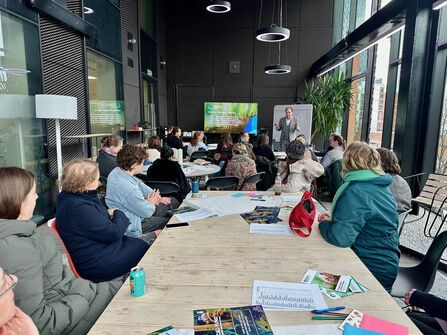
In addition to the plenary, I attended a full programme of parallel events.
Business and Finance Satellite Event hosted by Aviva
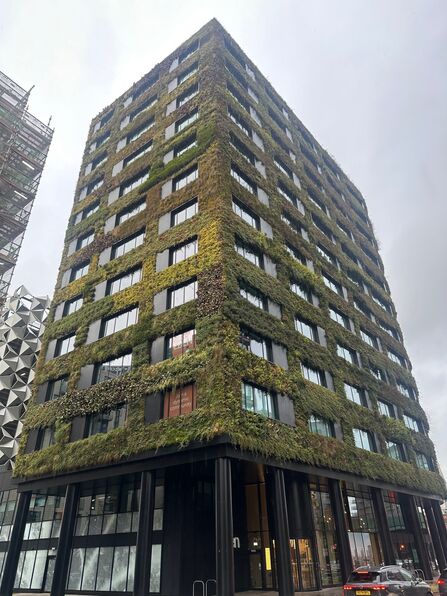
There were excellent conversations on risk, disclosure and the financial implications of nature loss. The message was simple. Nature is a financial issue as much as an environmental one. I particularly liked hearing from an old contact from my previous career, Tom Bloxham, Chairman of Urban Splash and who is championing urban greening in Manchester. It's well worth keeping an eye on CyanLines plan as it develops. It connects neighbourhoods through green (plants), blue (water) and biodiverse routes, and shows the scale of change that is possible. This is a very different city to the one I grew up in!
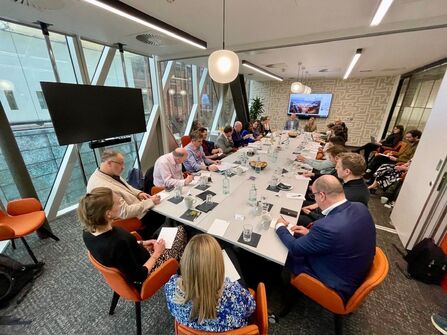
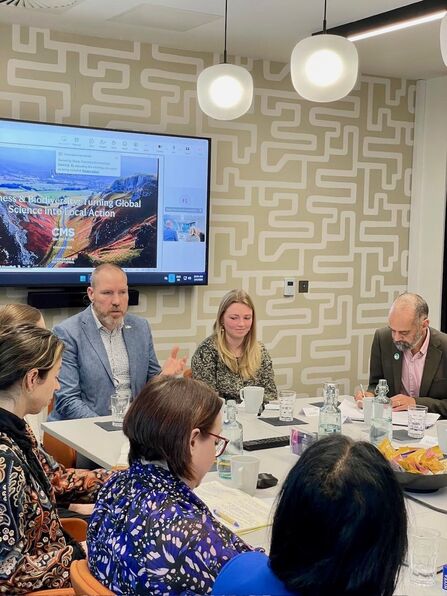
Business and Biodiversity Roundtable hosted by CMS Law
MWT Community Ranger, Hannah Phillips, and I joined Nigel Cheesley (Country Head, Isle of Man & Director, Sustainability) at Lloyds Bank International to explore how finance and business can accelerate nature recovery. With high-level representatives from business and other NGOs like RSPB and The Rivers Trust, the conversation was both interesting and encouraging.
Business and Biodiversity Working Dialogue
This session, hosted by the UK Business and Biodiversity Forum, Joint Nature Conservation Committee (JNCC), the Green Finance Institute and NatureAlpha, highlighted the pace of innovation in nature finance. The UK is moving quickly and the Isle of Man should remain closely connected to this work.
Evidence to Action Event
This evening programme was hosted by Manchester Metropolitan University, the University of Manchester and the University of Salford and brought researchers, policymakers and businesses together. The energy and commitment in the room were inspiring.
Field visits: inspiration from the North
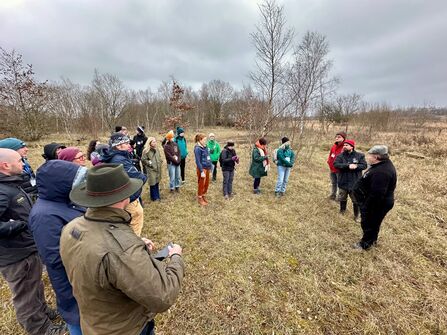
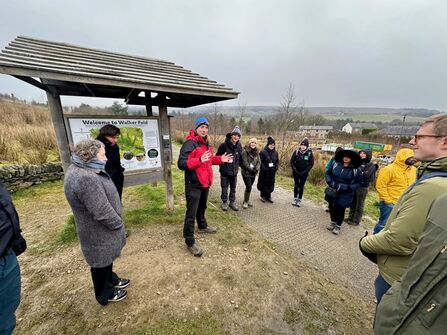
Possibly my favourite day of the week was joining Nature North, Lancashire Wildlife Trust for site visits across Greater Manchester and Lancashire.
We visited:
Wigan Greenheart, showcasing natural flood management;
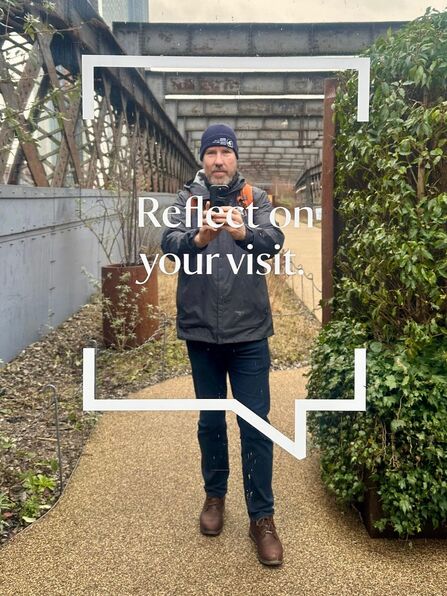
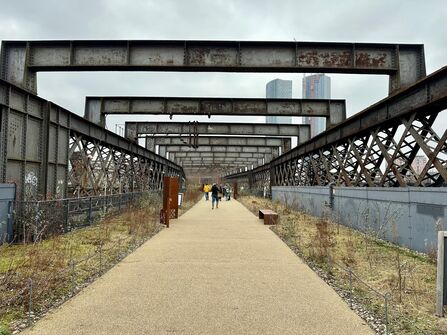
Castlefield Viaduct, an elevated green space in the heart of the city which I remember often viewing from the tram and thinking it had great potential for urban greening;
Smithills Estate, part of the Northern Forest and an excellent example of landscape scale restoration.
Together these sites demonstrated what is possible when nature, communities and regeneration come together.
These projects offer important lessons for the Isle of Man. Could Douglas one day develop its own version of a Green Spaces Fund or a CyanLines-style network? It is certainly worth exploring.

Leigh Morris
A proud moment with Wildlife Trust colleagues: It was great to see my predecessor, Leigh Morris, and spend time with colleagues from The Wildlife Trusts' central team and other local Trusts. The strength of our movement lies in shared learning and collaboration.
What IPBES12 means for MWT and the Isle of Man
Several clear priorities emerged from the week.
1. Nature finance must accelerate
Investment needs to flow into peatlands, woodlands, wetlands and coastal areas, and benefits must reach communities and land managers.
2. Businesses need clear ways to take action
Biodiversity credits, supply chain assessments and water security all form part of a bigger picture. Businesses can play a major role in nature recovery.
3. Behaviour change is essential
People protect what they value. Making nature recovery easy and accessible is vital.
4. Science, policy and community engagement must work together
The Isle of Man is small enough to act quickly. IPBES12 showed that islands can lead the way in global nature recovery.
Looking ahead
Returning to the Island, I feel energised by the innovation and ambition on display in Manchester. I am also confident that MWT and the Isle of Man can play a leading role in nature and business thriving together.
MWT will continue to champion nature-based solutions, community action and business engagement. We will keep building partnerships with government, the private sector and civil society.
Thank you to our staff, volunteers, members, partners and funders. And a massive thank you to Lloyds Bank International for covering Hannah's costs to attend the parallel events for a couple of days. Together we can build an Island where nature and the economy thrive side by side.
Gura mie eu. Thank you.
Here's to a future for nature in Manchester, the Isle of Man and beyond.
Graham Makepeace-Warne
Graham Makepeace-Warne
Graham Makepeace-Warne
Graham Makepeace-Warne
Graham Makepeace-Warne
Leigh Morris
Leigh Morris
Graham Makepeace-Warne
Graham Makepeace-Warne
Graham Makepeace-Warne