

Glen Auldyn © Graham Makepeace-Warne
MWT Glen Auldyn Reserve
MWT Glen Auldyn Reserve is the Island’s largest, landscape-scale, Manx rainforest restoration site, linking woodland, moorland and peatland recovery and one of the largest temperate rainforest restoration sites in the British Isles.
Glen Auldyn Reserve is a 1,124-acre upland reserve located in the upper glen inland from Ramsey. Now in the long-term care of Manx Wildlife Trust, it forms the largest site within the Manx Rainforest initiative and represents one of the most ambitious temperate rainforest restoration efforts in the British Isles. Around 750 acres have been identified as suitable for native woodland creation and recovery.
The work is supported through the long-term partnership with Aviva under The Wildlife Trusts’ Temperate Rainforest Restoration Programme, enabling significant investment in ecological restoration, peatland repair and habitat creation.
What we’re doing
- Restoring 1,124 acres at landscape scale, including ~750 acres of new native Manx Rainforest woodland
- Carrying out detailed surveys to guide where woodland, scrub and peatland recovery will work best
Why it matters
- Restores a major natural landscape supporting upland birds, raptors and moss-rich rainforest species
- Protects a large part of an entire river catchment, stabilising upland water flows.
- Protects a culturally significant Manx landscape for future generations
Benefits
- Climate resilience and reduced flood risk for Ramsey and Glen Auldyn, with cleaner, healthier water
- Increased biodiversity and species abundance, with benefits far beyond Glen Auldyn
- Peaceful recreation in a valley rich in Manx cultural significance and folklore
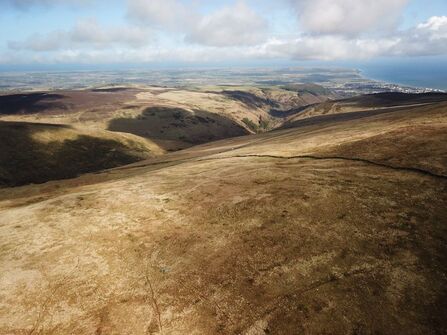
(c) Chrystals
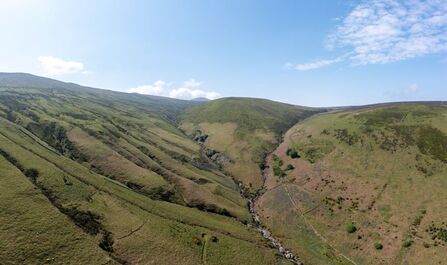
(c) Chrystals
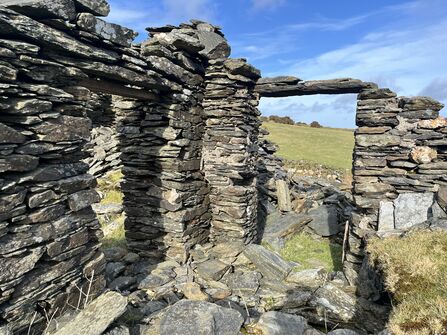
(c) Chrystals
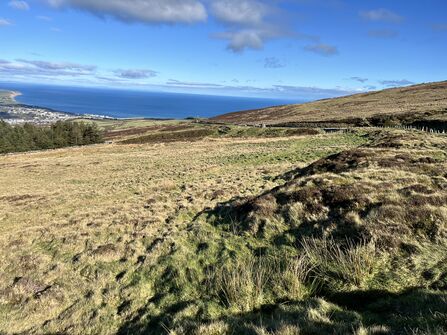
(c) MWT
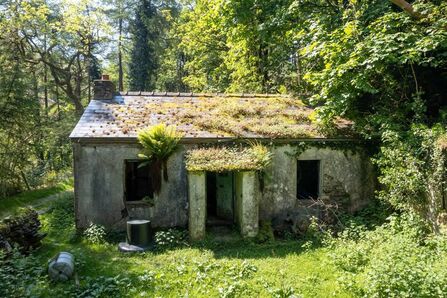
(c) Chrystals
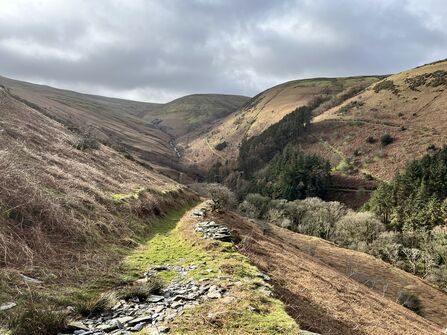
(c) MWT
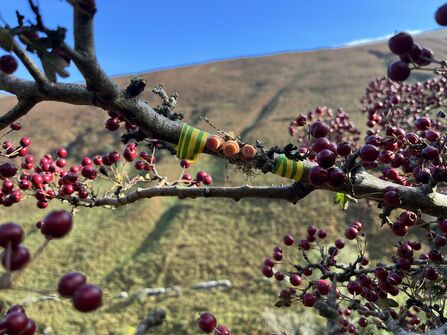
(c) MWT Conservation translocation of lichen at Glen Auldyn
Restoration Vision and Landscape Approach
Glen Auldyn’s restoration is designed at landscape scale. MWT is undertaking surveys of woodland, glen habitat, moorland and peat to understand where planting, regeneration, scrub development and hydrological restoration will be most effective.
- Native woodland will be established using saplings grown from local-provenance seeds at MWT Milntown Tree Nursery.
- Current sheep grazing will continue until ecological assessment planning is complete.
- Once the new trees are established, grazing will be reintroduced across the reserve to create and maintain a rich mosaic of wildlife-rich habitats, including woodland pasture.
- Peatlands and moorland hydrology will be restored and re-wetted, which is good for wildlife and provides increased flood protection for Ramsey.
- Maintaining and adapting over 20 kilometres of fencing and access routes.
This integrated plan supports healthy ecosystems while ensuring the landscape remains productive and workable.

Downy Birch Trees at Glen Auldyn
Biodiversity and Habitat Outcomes
Glen Auldyn will deliver significant ecological gains as woodlands, scrub and moorland and peatlands regenerate.
- Birds and raptors: Enhanced nesting and foraging areas for hen harrier (of international importance), as well as potential future habitat for species such as wood warbler, pied flycatcher and ring ouzel.
- As the woodland establishes, its early years of dense thicket will support a great abundance of migratory songbirds such as willow warblers.
- Every surface of the forest will be clothed in mosses, lichens, ferns and fungi. With increased humidity, Glen Auldyn will be as green in winter as it is in summer.
- Carbon and climate resilience: Woodland and peat both sequester carbon and stabilise the upland ecosystem.
- Connectivity: Glen Auldyn adjoins the Lazayre Scarpe, a continuous woodland area between Sulby and Ballure – the most wooded part of the Island, and will significantly contribute to a wider network of habitats.

Juniper Restoration and Upland Species Recovery
Juniper disappeared from the Isle of Man in 1947. Earlier MWT-led plantings along the Mountain Mile and surrounding uplands have already begun to establish juniper in suitable habitats. Juniper provides structural height in moorland without creating dense woodland, offers perches and cover for meadow pipit, stonechat and other upland birds and support long-term habitat for hen harrier, short-eared owl and upland invertebrates.
Benefits for People and the Island
MWT’s Glen Auldyn reserve protects almost the entire catchment of the Glen Auldyn River — a rare opportunity that brings wide benefits for nature and nearby communities.
• Reduced flood risk
Restoring woodland and moorland slows the flow of water from the hills, helping to reduce flooding in Ramsey and Glen Auldyn. It will stabilise river levels throughout the year, also benefiting salmon and trout.
• Cleaner, healthier water
Native trees and recovering peat filter sediment and nutrients before they reach the river, supporting wildlife and improving water quality as the river flows toward Ramsey. Native leaf-litter enters the river, feeding invertebrates that mean more and larger fish.
• Climate resilience
New woodland and restored peat store carbon, reduce erosion and help the valley cope better with heavy rain and drought. A mosaic of woodland and open habitat creates sheltered microclimates that buffer extreme weather events.
• A peaceful place for people
The glen offers quiet walking routes, wellbeing opportunities including wild swimming and a landscape that protects the stories and character of this historically important valley.

Page from W. Walter Gill's Manx Scrapbook, courtesy of James Franklin / Culture Vannin
An important place in Manx folklore
Glen Auldyn holds a prominent place in Manx folklore, with stories passed down across generations that highlight the glen’s reputation as a mysterious and culturally significant landscape. It has been described as ‘perhaps the best of all places..to look for Manx folklore’, in the words of James Franklin of Culture Vannin.
At every step, we come across places associated with mysterious (and often terrifying) folklore: At the tholtan of Tantaloo, the ghost of an old woman wielding a frying pan would threatened all that passed. The sighting of the Gigantic Hare by two young men out hunting has endured in cultural memory for over a hundred years. The Black Dub, a large pool upstream, possibly the site of an old quarry, was where a hard-working 19 year old, laying down to rest, encountered Daniel Dixon, the Fairy King. You can read about these stories in the book ‘The Folklore Sites of the Isle of Man’. There are old reports, and some traces still, of ancient burial sites and other features of archaeological interest.
To see Glen Auldyn mapped in c. 1870, click here and choose 'Basemap - Historic' from the 'Basemap Gallery' - you can compare old and new.
As the glen is restored for ecological benefit, it also helps protect the cultural heritage and storytelling traditions associated with this distinctive valley.
Our Partners
Manx Rainforest restoration is possible thanks to the hard work and partnership of many individuals, communities, organisations and businesses. In particular, thanks to our long-term project partners:

Partner Logos: Isle of Man Woodland trust, Aviva, The Wildlife Trusts, The Milntown Estate and Gardens

